Families often tell me they are trying to help, but the answer they keep hearing is no.
No to going for a walk.
No to doing the exercises.
No to joining an activity.
No to having somebody come into the home.
No to changing something that the family can clearly see is becoming difficult.
That can be frustrating, especially when you are worried about their health, mobility, safety or loneliness.
The instinct can be to explain more, remind more, encourage more or try to convince them.
Sometimes that only makes the resistance stronger.
A no is still communication.
Try not to treat the no as the whole story
A person may say no because they do not want the activity.
But there may also be something else underneath it.
They may be tired.
They may be in pain.
They may be worried about falling.
They may feel embarrassed because something that used to be easy is now difficult.
They may not understand why everybody suddenly wants them to exercise.
They may simply want to make their own decision.
We cannot assume we know the reason, but we can stay curious about it.
Start with what matters to them
If somebody does not want to go for a walk because walking for exercise holds no appeal, that does not necessarily mean they do not want to move.
They may be willing to walk outside to look at the garden.
They may want to come with you to check the letterbox.
They may stand to help prepare something at the kitchen bench.
They may move when familiar music comes on without thinking of it as exercise at all.
The reason for moving can matter just as much as the movement itself.
Change the invitation
Sometimes the wording matters.
“You need to do your exercises” can feel very different from “Do you want to come outside with me for a few minutes?”
“You should be moving more” can feel very different from “Would you like to help me with this?”
The second version does not hide the importance of movement.
It simply puts the relationship and the person back into the moment.
“Would you like to do this with me?”
“Would now be okay, or would you rather do it later?”
“Do you want to try one, then decide if you want to keep going?”
“Would you like some help or would you rather do it your own way?”
“Would you rather sit here or over there?”
Sometimes joining in works better than supervising
Nobody wants to feel watched while somebody waits for them to perform an activity.
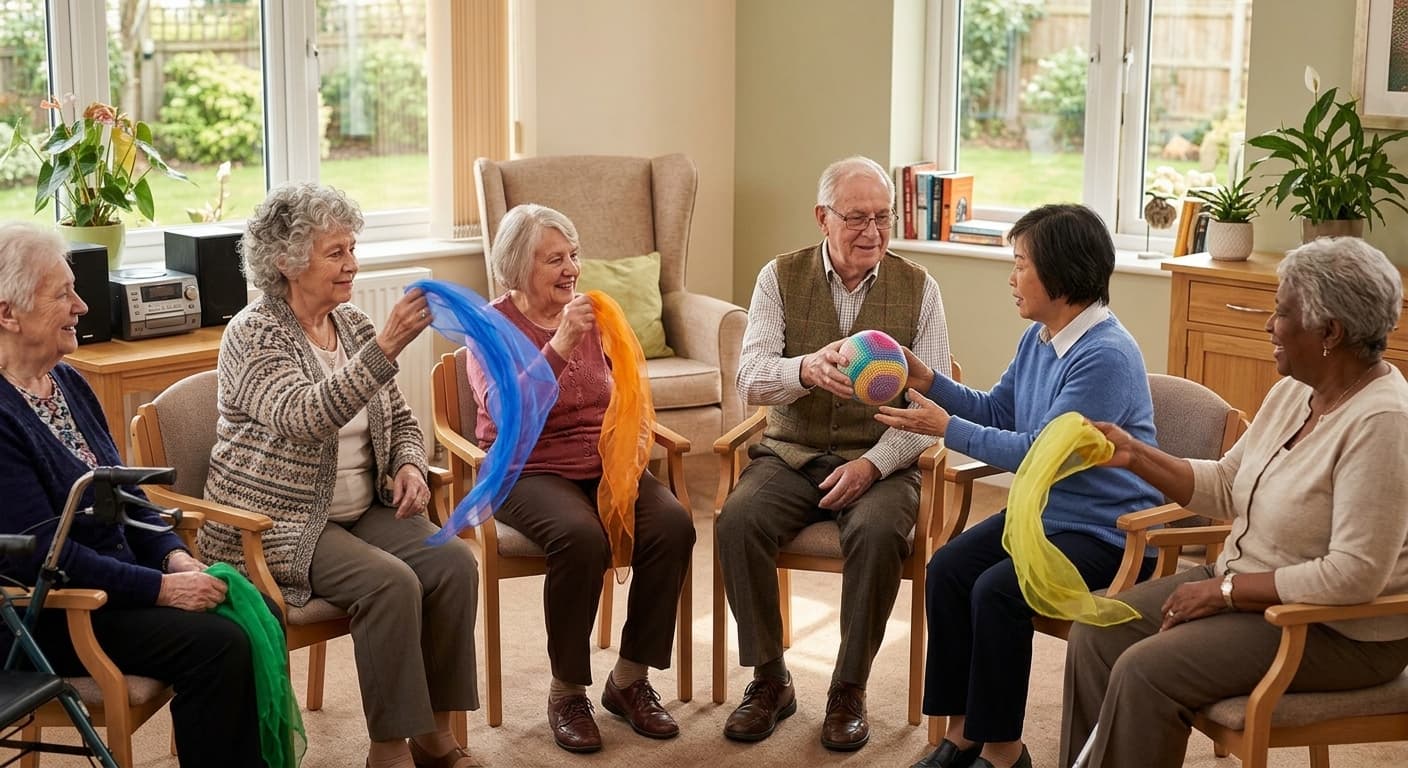
If it is appropriate, try doing something alongside them.
Put the music on for both of you.
Sit at the table together.
Walk outside together rather than telling them to go for a walk.
Pick up the cards and play too.
Shared activity can feel very different from being given another task.
This is one of the ideas behind my Never Too Old to Play approach.
Play, music, curiosity and shared activity can give us reasons to participate without making every moment feel clinical.
Sometimes joining the person works better than trying to motivate them from the other side of the room.
When you run out of ideas, keep the starting point simple
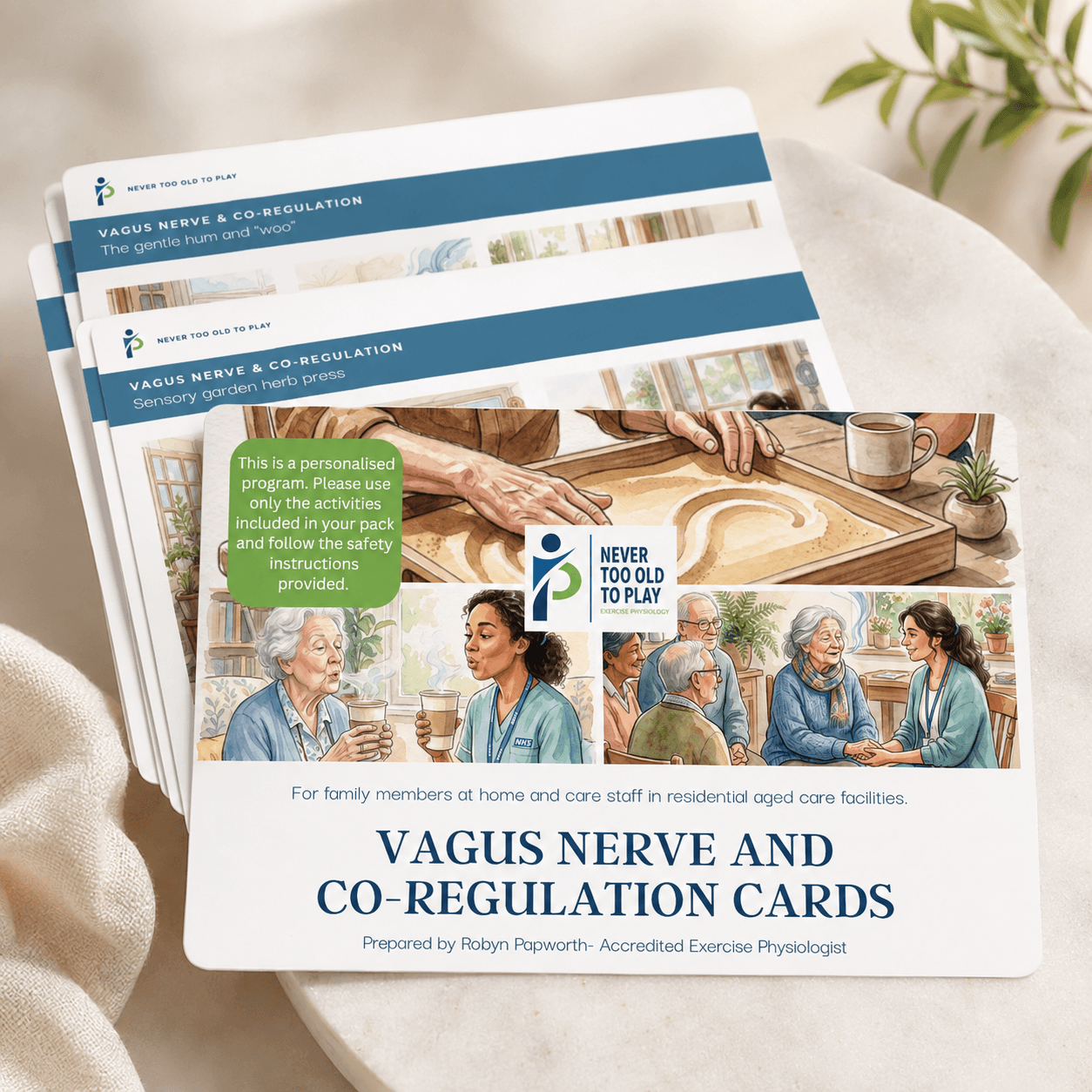
This is also why I created my Co Regulation Sensory Cards.
Sometimes a family member or support worker does not need another long program.
They need another way into the moment.
The cards use music, movement, rhythm, familiar objects, sensory experiences and conversation as possible starting points.
If the person does not want one idea, you do not need to force it to work.
Try something else, come back later or simply spend time together without an activity.
A no can also be about fear
There is one area where I would encourage families to look a little more closely.
If somebody repeatedly refuses movement because they are worried about falling, feel unsteady, are dizzy, have pain or no longer trust their body, the answer is not to simply persuade them to push through.
Their concern may be telling you something important.
In those situations, it may be appropriate to seek individual advice about their balance, strength, mobility, pain or falls risk.
I talk more about this in falls prevention is about confidence, not just avoiding falls.
When not to simply encourage them to try
If their refusal is connected with a recent fall, new unsteadiness, dizziness, pain, illness, a recent hospital stay or a noticeable change in mobility, their safety should be considered before encouraging more challenging movement.
If you are unsure what is safe, speak with their GP or an appropriate allied health professional rather than assuming they should simply have a go.
What if they refuse help that really is needed?
This can be one of the hardest parts for families.
Respecting choice does not mean ignoring a serious safety concern.
If you are worried that your family member is no longer managing safely, has experienced a significant health change, is repeatedly falling or needs support beyond what the family can safely provide, it is appropriate to seek professional advice.
You do not have to solve every concern through persuasion at home.
Sometimes the next step is simply getting another person involved who can help you understand the situation more clearly.
Protect the relationship where you can
When you are worried about someone, it can feel as though every conversation needs to be about what they should be doing.
Try to leave some room for the relationship too.
Have the cup of tea.
Put the music on.
Talk about something completely unrelated to health.
Share the joke.
Sit quietly together.
Not every no needs to become a negotiation.
Sometimes respecting the no today is what leaves room for another invitation tomorrow.
Keep exploring
Supporting Someone Without Taking Over
Gentle ways to help an older family member while protecting choice, safety and independence.
Learn more
Falls Prevention and Confidence
What families should consider when an older person becomes worried about falling.
Learn more
Co Regulation Sensory Cards
Practical ideas for movement, music, sensory experiences and connection.
Learn more
This article provides general educational information and is not an individual assessment, exercise prescription or determination that a particular activity is safe. If an older person has fallen, feels newly unsteady, has dizziness, new pain, a significant change in mobility or you are concerned about their safety at home, seek individual advice from their GP or an appropriate health professional.