Caring for someone you love can involve a lot of thinking.
Are they eating enough? Are they moving enough? Could they fall? Are they lonely? Are they managing at home? Should I be doing more?
It can become very easy for time together to turn into checking, reminding and organising.
Sometimes that support is necessary.
But it is also worth protecting the parts of your relationship that have nothing to do with appointments, medications, exercises or what needs to be done next.
You are allowed to just be their family too.
Helping does not always mean doing it for them
When something becomes slower or more difficult, our instinct can be to step in.
We carry the cup. We get the jumper. We put everything away. We bring the item closer. We finish the task.
Sometimes that is exactly the right thing to do.
At other times, a little more time or a small amount of support may allow the person to keep doing part of the task themselves.
That participation matters.
It may involve movement, decision making, confidence, routine and simply the feeling that this is still their life and their home.
Try offering rather than directing
Small changes in language can make support feel very different.
Instead of deciding what happens next, try leaving room for choice.
“Would you like to come outside with me?”
“Do you want to help me with this?”
“Would you rather sit here or over near the window?”
“Do you feel like putting some music on?”
“Would you like me to help, or do you want to keep trying?”
Choice does not need to be complicated.
Sometimes two simple options are enough.
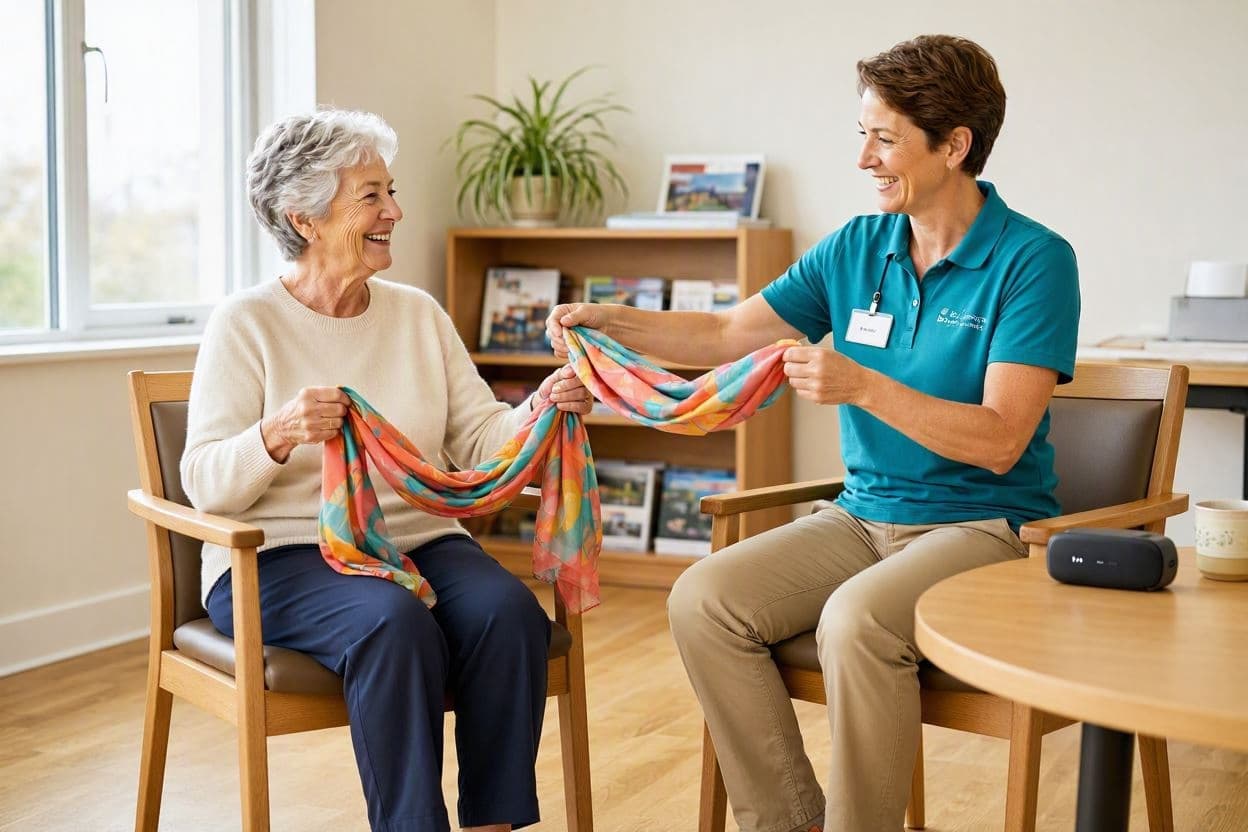
Keep ordinary movement in the day where it is appropriate
Because of my Exercise Physiology background, I notice how much movement can quietly disappear when somebody starts receiving more help.
A family member may begin doing all the carrying, reaching, fetching and household jobs because they are trying to make life easier.
But everyday activities can also be opportunities to continue using the body.
That might be walking together to look at the garden, standing to put something away, reaching for an item on the table or helping prepare a simple snack.
The important part is that the activity is appropriate and safe for that particular person.
If you are concerned about balance, falls, pain, strength or mobility, those concerns deserve individual attention rather than simply encouraging someone to do more.
This is why my Personal Exercise Physiology Pack is based around the individual person rather than a generic exercise sheet.
You do not need to entertain someone all day
Families can also feel pressure to constantly find activities.
There can be a feeling that every visit should involve something productive.
It does not have to.
Sitting together while music is playing can be enough.
Making tea can be enough.
Looking at photos, watering plants, folding something together, playing cards or talking about what is happening outside can all give the moment somewhere to go.
Not every meaningful moment needs an outcome.
Sometimes a good afternoon is simply an afternoon that felt like time together.
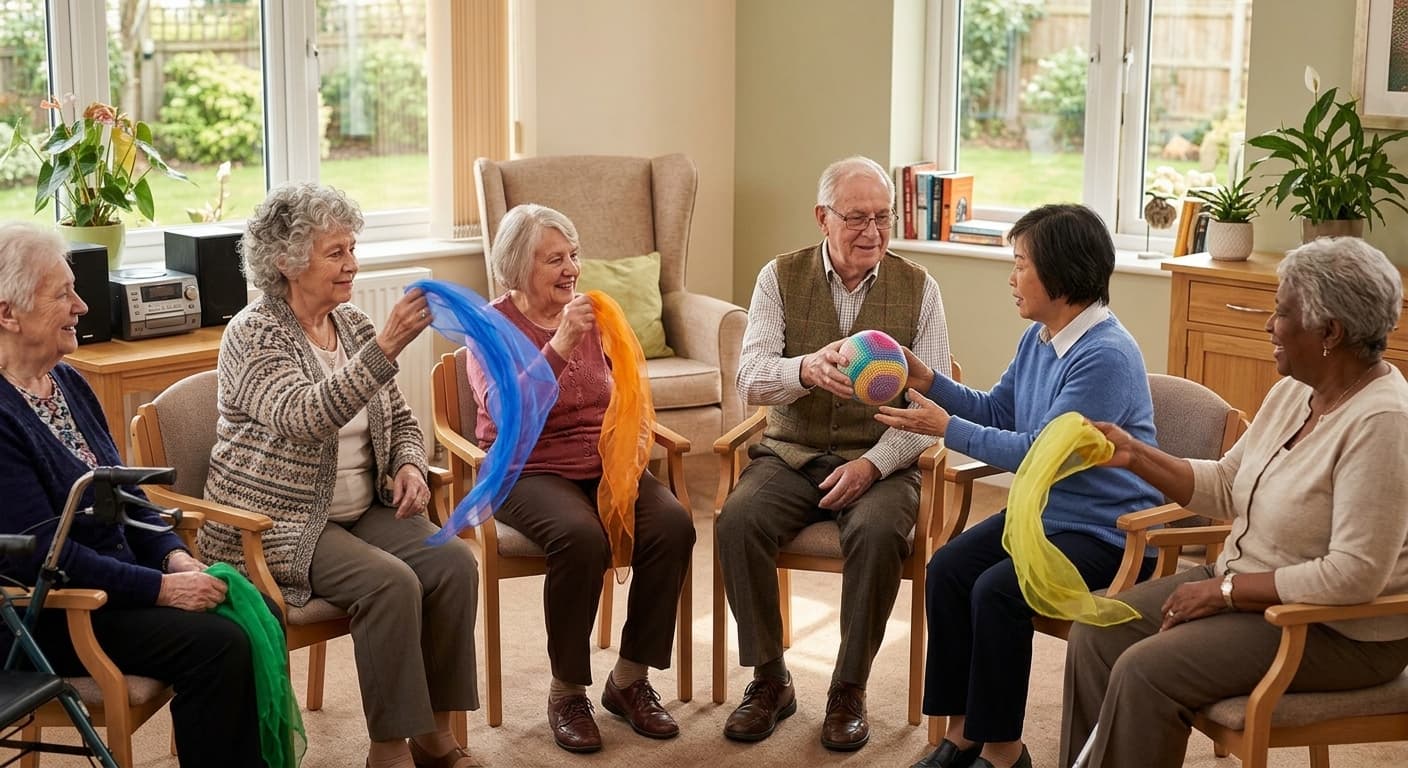
Start with what they already enjoy
You do not have to come up with something completely new.
Think about the person before thinking about the activity.
What music have they always enjoyed?
Did they garden, cook, sew, build, play cards, follow sport, collect things, dance, draw, listen to the radio or enjoy being outside?
Familiar interests can give you a much better starting point than choosing an activity simply because it has been labelled as suitable for older people.
This idea also sits behind my Never Too Old to Play approach.
Play does not need to become childish as we age.
It can simply mean having opportunities for enjoyment, curiosity, movement, creativity and time with other people.
When you run out of ideas, keep it simple
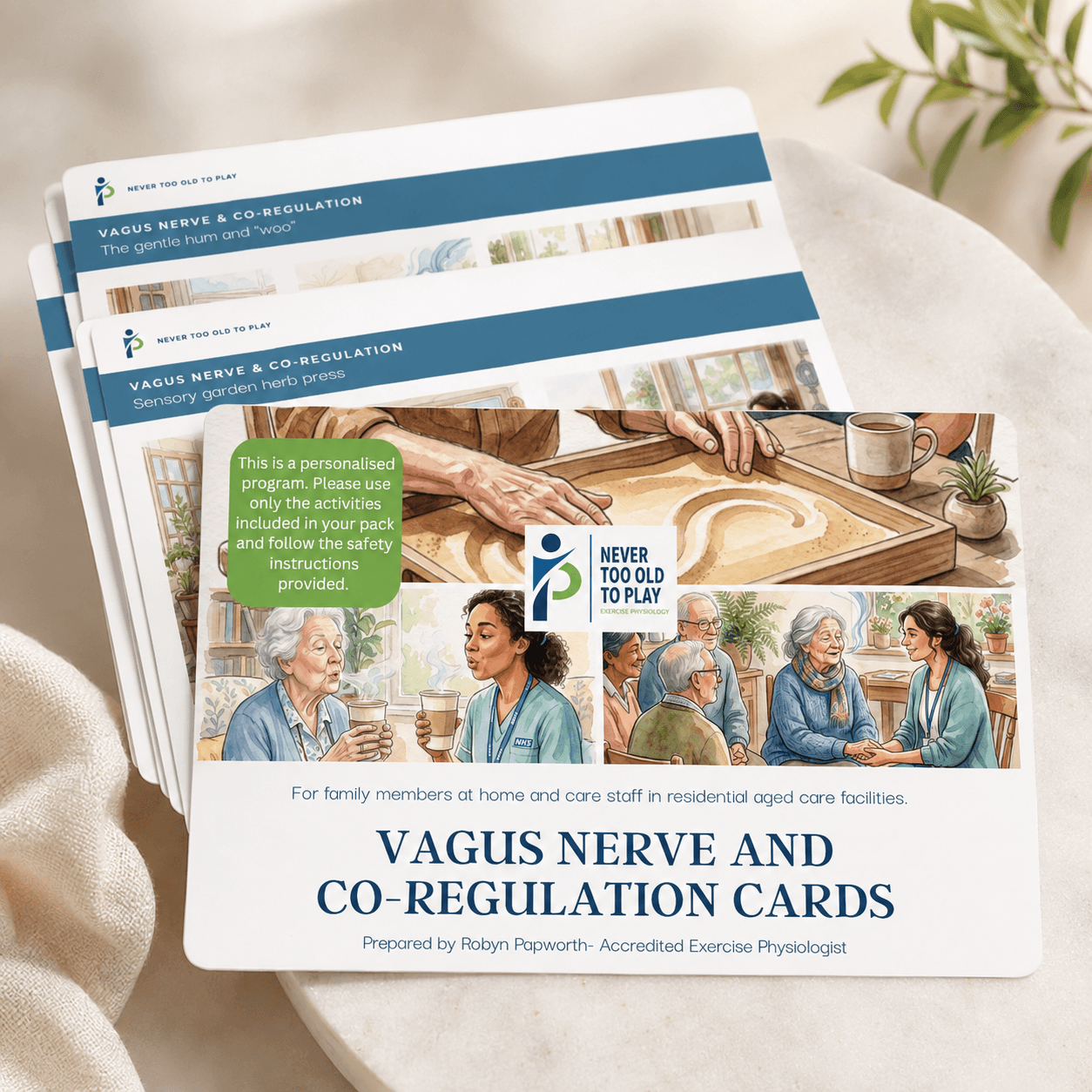
This is one of the reasons I created my Co Regulation Sensory Cards.
Sometimes families and support workers do not need another course.
They simply need a useful idea they can pick up and try.
The cards use movement, music, rhythm, familiar objects, sensory experiences and conversation as ways of creating opportunities for connection.
The activity is an invitation. It does not have to be completed and it does not have to look the same every time.
Notice when enough is enough
Supporting participation also means respecting when somebody does not want to participate.
They may be tired.
They may not like the activity.
They may want quiet.
They may simply want you to sit beside them.
Changing the plan is not a failure.
Sometimes responding to the person in front of you is the most useful thing you can do.
And remember that you are in this relationship too
Caring for someone can gradually change the relationship between you.
You may find yourself organising appointments, checking safety, repeating information and carrying responsibilities you never expected to carry.
There is no perfect way to get every interaction right.
You can care deeply about somebody and still feel tired.
You can want to help and still be unsure what to do.
And you can support someone without needing to turn every moment you spend together into a task.
Sometimes being their daughter, son, partner, sister, brother or friend is enough for that moment.
Keep exploring
Co Regulation Sensory Cards
Practical ideas for movement, music, sensory experiences and time together.
Learn more
Personal Exercise Physiology
Individual movement support for concerns such as balance, mobility, pain, strength and falls risk.
Learn more
Never Too Old to Play
Why play, movement, curiosity and connection still matter throughout adult life.
Learn more
This article provides general educational information. Support, activities and movement should be appropriate to the individual, their health, abilities, preferences, environment and current professional guidance.