When people hear the words co regulation, they can sometimes imagine a strategy that is only needed when somebody is upset.
I see it more broadly than that.
Co regulation can be part of ordinary interactions between two people.
It can happen while listening to music, preparing a drink, walking outside, talking about something familiar or sharing an activity.
The important part is often not the activity itself.
It is having another person alongside you who is paying attention to your pace, preferences, communication and response.
Sometimes connection begins because two people have something simple to do together.
Co regulation is not about controlling another person
Good support should not be about making somebody calm, compliant or easier to manage.
The person still has preferences. They can say no. They can change the activity. They can stop.
What works on one day may not be what they want on another.
This is why I keep coming back to noticing the person before following the activity.
The activity is an invitation, not the goal.
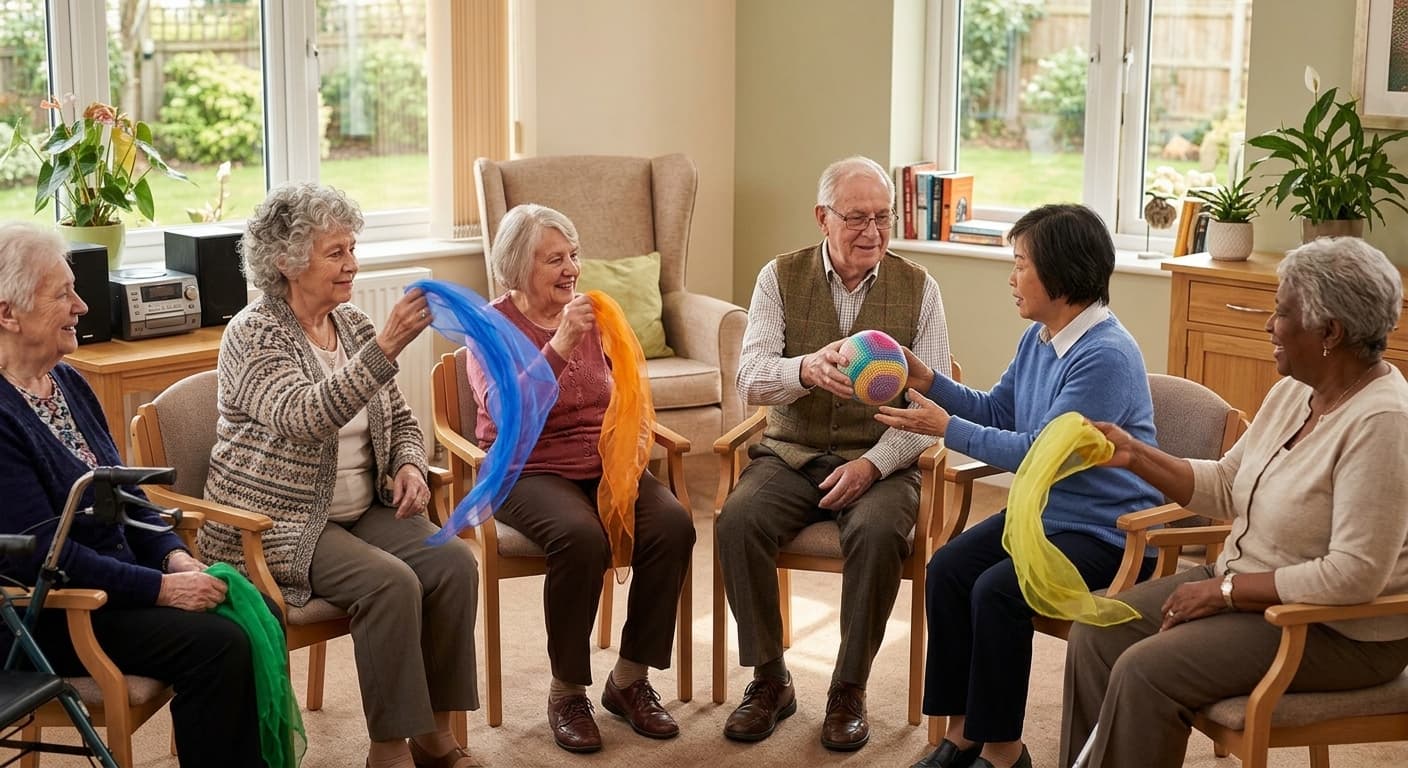
Music can give us somewhere to start
Music was one of the things I loved using when I first worked in aged care.
It gave us a reason to move together without beginning with an instruction to exercise.
A familiar song might lead to tapping a hand, moving the feet, singing, remembering something or starting a conversation.
None of those responses need to be forced.
Sometimes the shared experience itself is enough.
Familiar objects can work in the same way
We do not always need specialist equipment to create a useful interaction.
Everyday objects can give people something familiar to reach for, hold, sort, move, talk about or use together.
The best choice depends on the person.
Something connected to their interests, routines or past experiences may be much more meaningful than an activity chosen simply because it appears on a list.
Start with the person, then choose the activity.
Movement can be part of connection too
Movement does not always need to be introduced as exercise.
Reaching for an object, stepping outside, moving to music or helping with an everyday activity can all involve the body.
This is one of the ideas that connects my work with children and older adults.
In why we are never too old to play, I explore why opportunities for enjoyable movement and shared activity still matter throughout adulthood.
Why I created the Co Regulation Sensory Cards
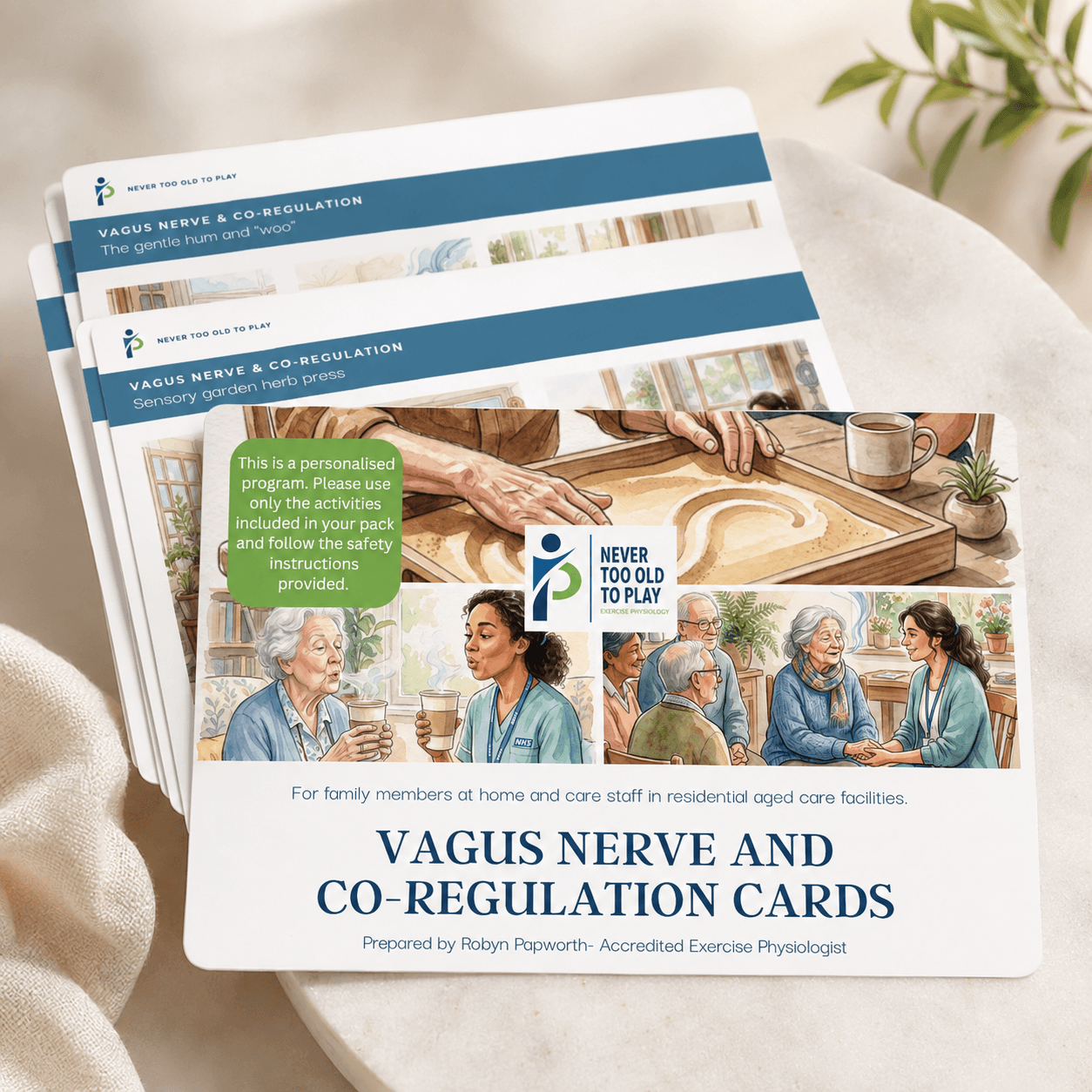
I created the Co Regulation Sensory Cards because sometimes a family member or support worker simply needs another idea.
The cards include opportunities involving movement, rhythm, sensory experiences, familiar objects, conversation and connection.
They are not exercise prescriptions and they are not designed to turn ordinary time together into a clinical session.
They are prompts that can help create another opportunity to connect and participate.
A team may need something even simpler
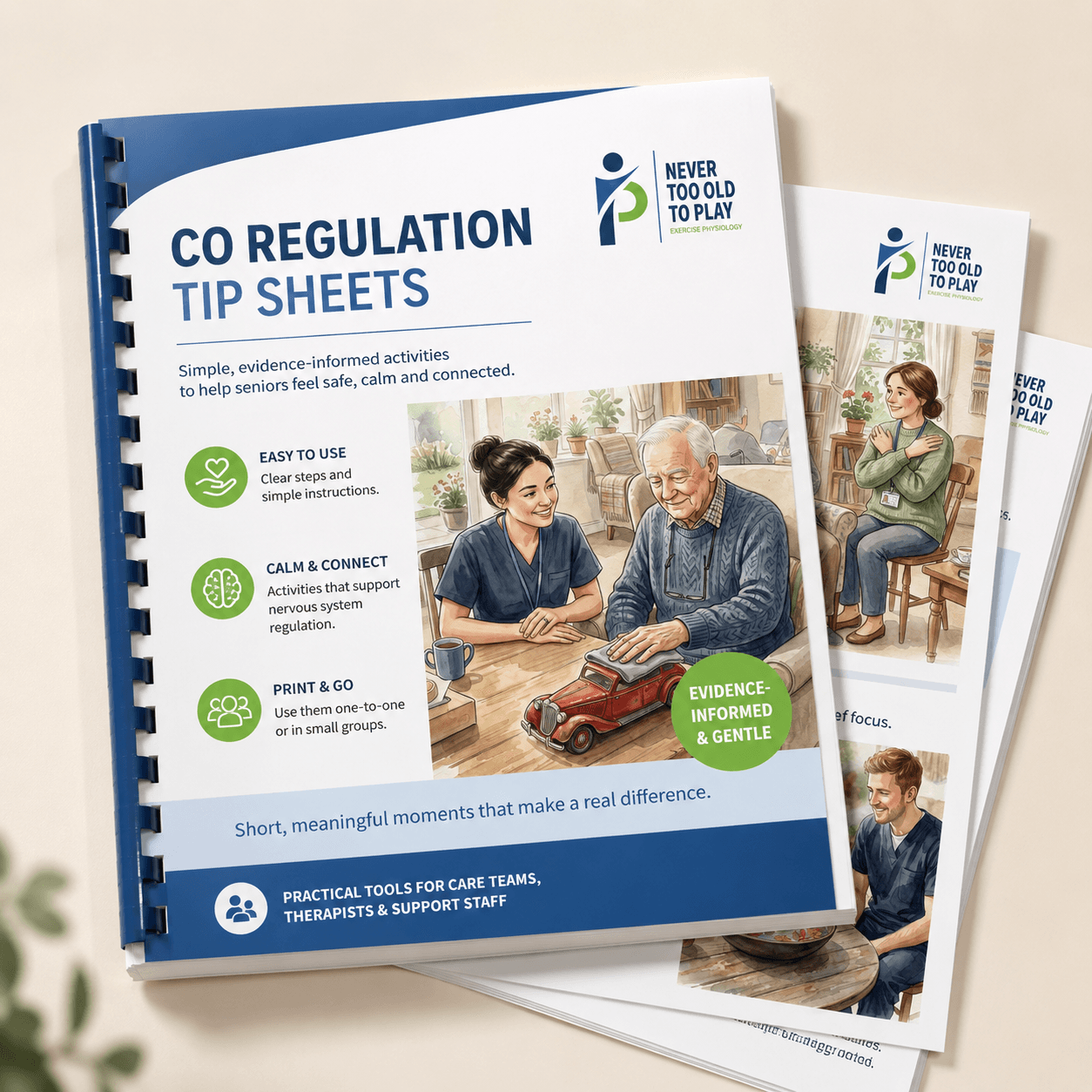
This is where the Co Regulation Tip Sheets can be useful.
A care team can choose one idea to discuss at handover or use a relevant sheet alongside support planning and team conversations.
Sometimes one practical idea is easier to put into action than a large amount of information all at once.
Co regulation should still feel human
We can know a lot about sensory support, regulation and communication and still miss the most important part if we stop noticing the person in front of us.
Sometimes the best support is slowing down.
Sometimes it is joining in.
Sometimes it is offering something familiar.
And sometimes it is recognising that the person does not want the activity at all.
That is why I want these resources to give people ideas without becoming another rigid program.
Keep exploring
This article provides general educational information. Individual preferences, health, abilities, communication and current support guidance should always be considered.